Supporting 24/7 Independence & Dignity at Home with Advanced Lewy Body Dementia
Quick Summary: In this case study, Acorn shares how 24/7 dedicated caregiver registry coverage, creative dementia behavioral insights, and hospice collaboration enabled an 82-year-old retired history professor in Chapel Hill, NC, to remain safely and comfortably in her home through the end of her life.
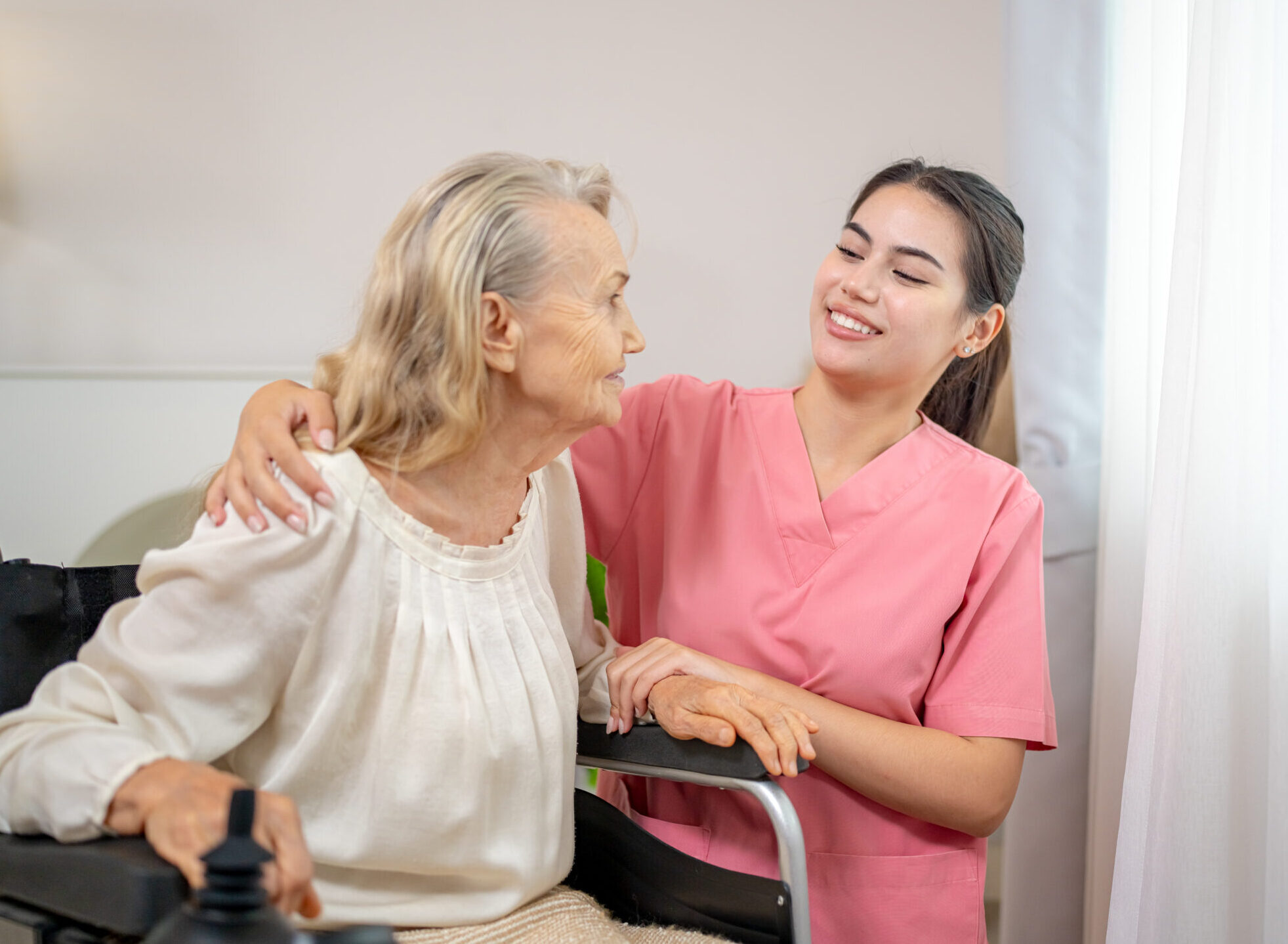
At a Glance
| Focus Area | Initial Challenge | Acorn Support Strategy | Outcome |
| Care Coverage | Family friend unavailable for all hours; family missing work | Screened, vetted 24/7 caregivers & flexible fill-in coverage | 100% Continuous In-Home Care |
| Nutrition & Behavior | Weight loss, sundowning, hallucinations, and tantrums | Shifted from set meals to sensory “fun foods” & daily grazing | Weight Gain & Behavioral Calming |
| Bathroom Independence | Cognitive regression & frequent bathroom accidents | Visual cartoon prompts installed on bathroom walls | Reduced Accidents & Restored Independence |
| End-of-Life Wishes | Advancing disease requiring end-of-life support | Caregivers seamlessly collaborated with hospice team | Fulfilled Wish to Pass Comfortably at Home |
- THE CLIENT AND THE CHALLENGE
The Client:
“Dr. Elizabeth,” an 82-year-old retired history professor living in Chapel Hill, North Carolina, wished to stay in her cherished home. Her son lived nearby and was deeply involved in her care.
The Challenge:
Dr. Elizabeth was living with moderate dementia and Lewy body disease. As the condition progressed, she began experiencing Parkinson-like motor symptoms that caused ambulation and balance issues. Cognitive decline also created dangerous home safety risks, such as potential wandering and accidentally leaving the kitchen stove on.
Initially, a family friend watched Dr. Elizabeth during weekday daytime hours. While helpful, the friend wasn’t always available. When gaps occurred, the family had to step in, forcing her son to take increasing amounts of time off work. As her care needs grew beyond what a casual arrangement could handle, the family needed a dependable, professional solution.
“We loved having a family friend step in, but as Mom’s Lewy Body dementia progressed, the care gaps became overwhelming. We were missing work and constantly worried about her safety at home.” — Client’s Son, Chapel Hill, NC
- THE SOLUTION AND CUSTOMIZED CARE PLAN
The family contacted Acorn to arrange for experienced caregivers with expertise in complex memory care and challenging dementia behaviors.
Around-the-Clock Coverage & Seamless Reliability
Acorn helped arrange 24/7 home coverage with thoroughly screened and vetted caregivers. To preserve continuity, Acorn also provided flexible fill-in caregivers to cover the family friend’s hours whenever she was away. When a caregiver wasn’t the right personality fit, Acorn acted quickly to propose a replacement, ensuring Dr. Elizabeth always felt comfortable and safe.
Creative Problem-Solving for Complex Behaviors
As her Lewy Body Disease advanced, Dr. Elizabeth experienced heightened hallucinations, sundowning, and severe behavioral tantrums. Acorn shared specialized dementia care resources and behavioral insights with the family, leading to two major breakthroughs:
- Solving Malnutrition & Sundowning: Reviewing her routine revealed that Dr. Elizabeth had lost her sense of taste—a common symptom in neurodegenerative conditions. She was refusing full meals because sitting down to eat felt overwhelming, leaving her hungry, agitated, and prone to evening tantrums.
- The Pivot: The son shifted the care plan from three formal sit-down meals to offering accessible “fun foods” and encouraging her to graze on nutritious snacks throughout the day. She began eating more regularly, gained healthy weight, and her severe behavioral tantrums noticeably subsided.
- Restoring Bathroom Independence: Over time, cognitive regression caused Dr. Elizabeth to forget how to use the toilet.
- The Pivot: Guided by dementia care insights provided through Acorn, the family placed simple cartoon visual prompts in the bathroom showing someone using the toilet. These visual cues immediately bridged the cognitive gap, helping her recognize what to do, drastically reducing accidents, and restoring her personal dignity.
- END-OF-LIFE CARE AND RESULTS
When Dr. Elizabeth’s condition progressed to the point of requiring end-of-life care, the caregivers worked hand-in-hand with her hospice team, following the exact guidance of the hospice nurse.
- Met Her Ultimate Wish: Thanks to the coordinated 24/7 support, Dr. Elizabeth was able to remain comfortably in her Chapel Hill home until the end of her life, exactly as she and her family wished.
- Family Relief: Her son was able to step back from the stress of full-time hands-on caregiving and return to being a supportive, loving son during his mother’s final chapter.
Looking for Specialized Memory Care Support in Chapel Hill?
Navigating Lewy body dementia, Parkinson’s-related mobility loss, or complex memory care requires more than standard home assistance—it takes experience, problem-solving, and reliable caregiver coverage.
Contact Acorn Today to Discuss Your Family’s Care Needs